Signal & Noise
Skimle žinių centras, skirtas kokybiškai analizei naudojant šiuolaikinius metodus

Exploratory research: definition, design, 4 methods and examples
Exploratory research studies a problem nobody has defined yet. Definition, research design, 4 methods and 5 examples, and whether it is qualitative.

Focused interview (focus interview): definition, Merton's 4 criteria and how to run one
A focused interview is a one-to-one interview about one shared experience, from Merton and Kendall (1946). Definition, how it differs from a focus group, and 4 steps.

Purposive sampling: definition, 7 types and examples in qualitative research
Purposive sampling means choosing participants deliberately. 7 types with examples (maximum variation, criterion, snowball and more) and how to justify them.

Qualitative data examples: 20 real examples across 8 types
20 examples of qualitative data, from interview transcripts and field notes to survey comments and Reddit threads, grouped into 8 types with how each is used.

What is qualitative data? Definition, meaning and how it differs from quantitative data
Qualitative data meaning: non-numerical information about experience and context. Definition, how it differs from quantitative data, and how to analyse it.

Variables in research: types of variables with examples (independent, dependent and more)
Types of variables in research explained with examples: independent, dependent, control, confounding, moderating, plus nominal, ordinal, interval and ratio.
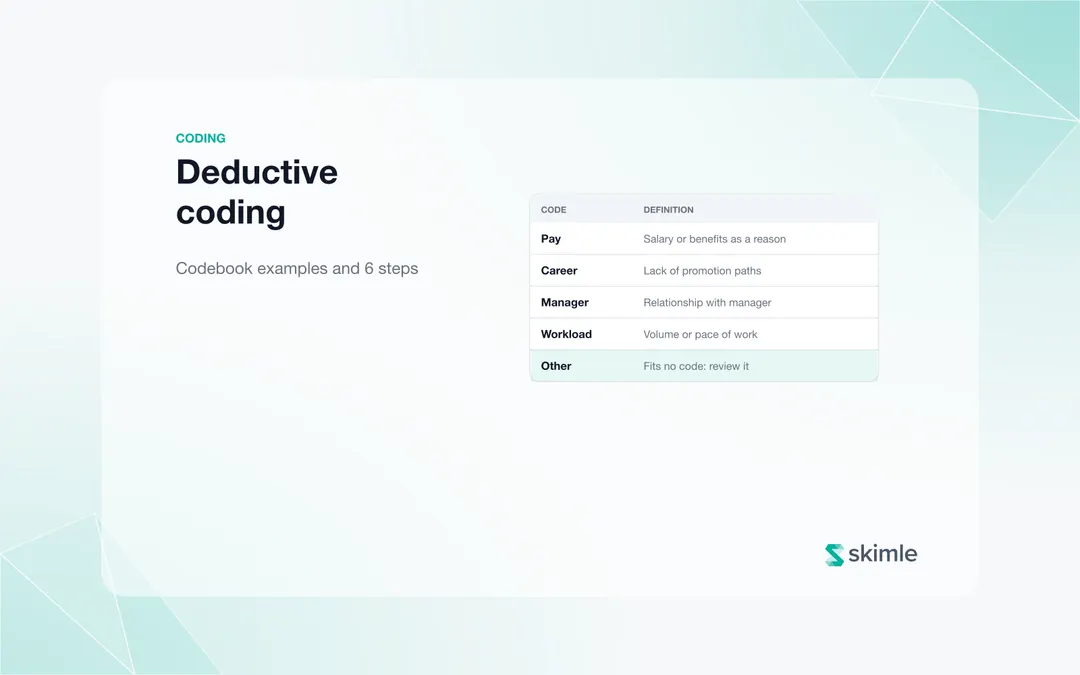
Deductive coding in qualitative research: codebook examples and 6 steps
Deductive coding applies a codebook from theory or research questions to qualitative data. A worked codebook example, 6 steps, and inductive vs deductive.
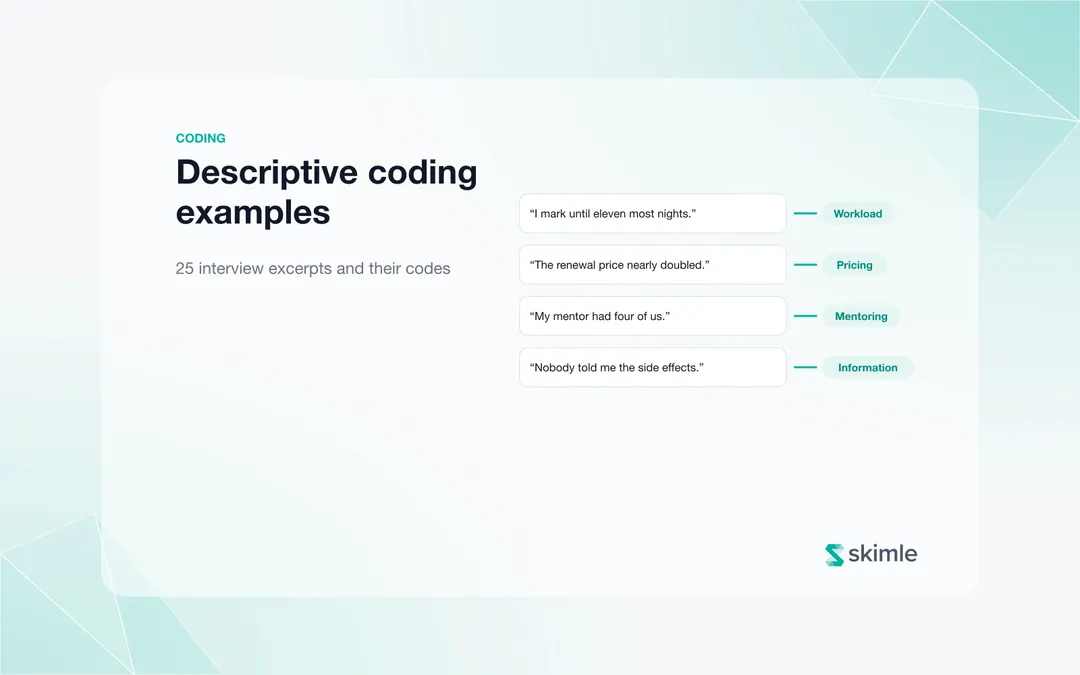
Descriptive coding examples: 25 interview excerpts and their codes
Descriptive coding examples from health, education, HR, customer and policy interviews: 25 excerpts with their codes, mistakes to avoid and how to do it.
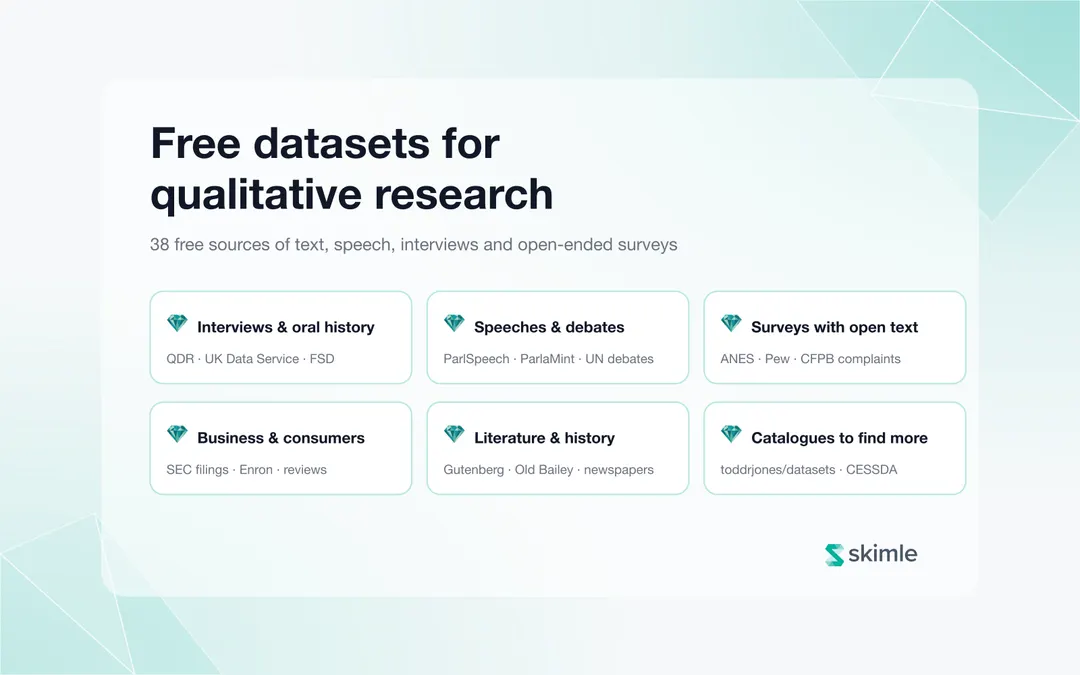
Free datasets for qualitative research
Free datasets for qualitative research: interview archives, parliamentary speeches, open-ended surveys, reviews and literature, plus catalogues to find more.
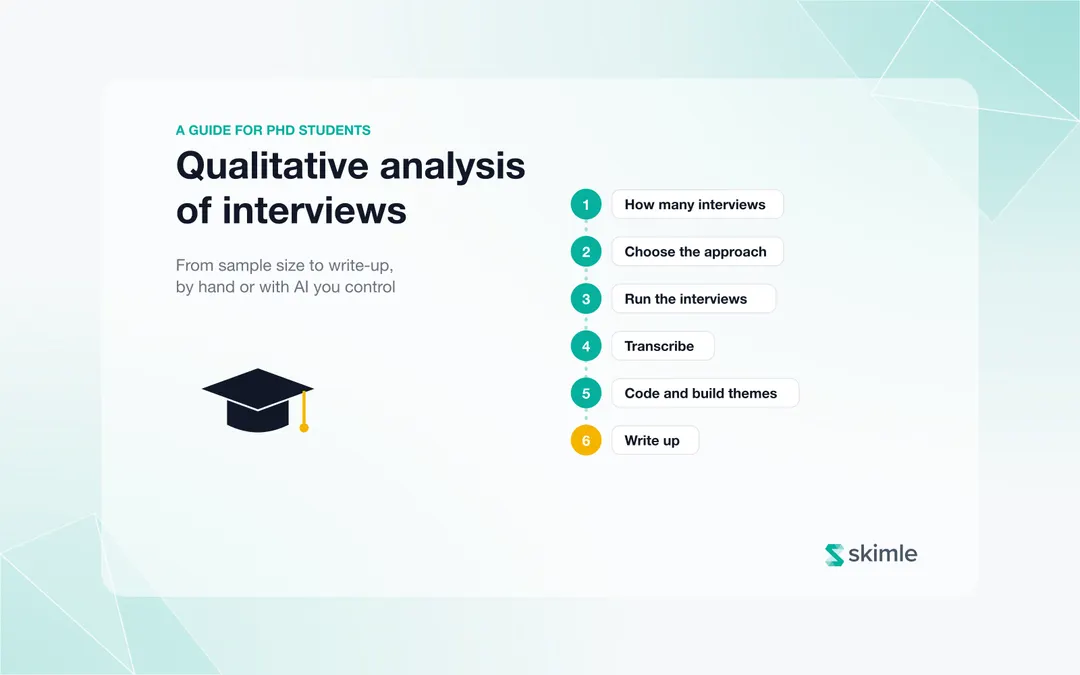
Guide for PhD students doing qualitative analysis of interviews
A PhD student's guide to qualitative interview analysis: sample size, methods, transcription, coding by hand or with AI, and writing up, with links to go deeper.

Reflexive thematic analysis: Braun and Clarke (2019, 2021, 2022) and what changed since 2006
Braun and Clarke's reflexive thematic analysis: what changed in 2019, 2021 and 2022, which paper to cite (with DOIs), the 6 phases and 5 common mistakes.

Qualitative research examples: 16 real studies and 5 student project ideas
16 qualitative research examples from sociology, health, education, management and business, plus 5 student project ideas, each with its method and finding.
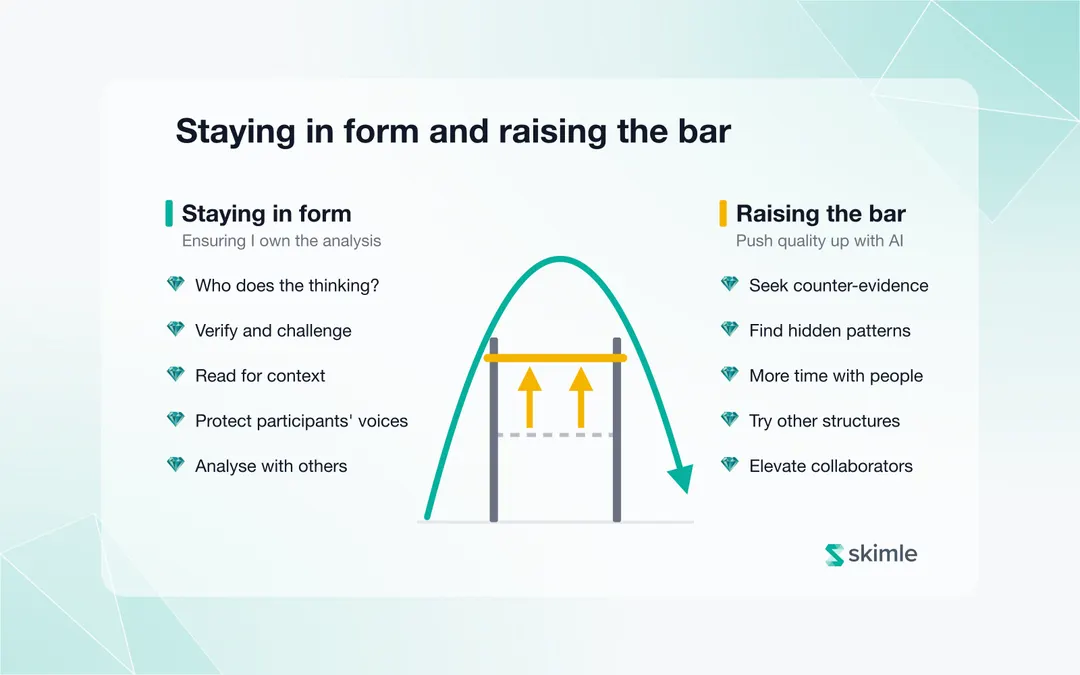
Reflexivity on the role of AI in research: am I staying in form AND raising the bar?
Reflecting on AI is a good practice, whether you use it or not. I argue to consider both the risks of losing ownership, but equally the opportunities of improving quality.

Using AI for ethnographic research: a practical guide for responsible AI-assisted ethnography
How AI fits across an ethnographic study: literature review, transcribing field notes and interviews, finding themes, and testing alternative framings.

Reflexive thematic analysis: the 6 phases with a worked example
A step-by-step walkthrough of Braun and Clarke's 6 phases of reflexive thematic analysis, with a real dataset example and guidance for PhD students.

Discourse analysis in qualitative research: approaches, steps, and when to use it
Discourse analysis examines how language constructs meaning and power. This guide covers the main approaches, practical steps, and when to choose it over thematic analysis.

Data saturation in qualitative research: what it means and how to reach it
Data saturation is misunderstood in qualitative research. Learn what it actually means, code vs meaning saturation, and practical guidance for your study.

Framework analysis in qualitative research: a 5-step guide with examples
Framework analysis is the standard qualitative method for applied and policy research. This guide covers all 5 steps with worked examples and when to use it.

Data collection methods in qualitative research: 8 approaches compared
Qualitative data collection includes interviews, focus groups, observation, and more. This guide compares 8 methods on depth, feasibility, and analysis needs.

How to code interview transcripts
How to code interview transcripts step by step: build a codebook, apply codes consistently, cluster into themes, check reliability, and scale with AI.

What is CAQDAS? Qualitative data analysis software explained
CAQDAS is qualitative data analysis software for coding and managing research data. Learn its history, the 3 generations, and how AI is changing QDA software.

How to code qualitative interviews with AI
How to code qualitative interviews with AI: why chatbots summarise instead of coding, how systematic AI coding works, and how to export to NVivo via REFI-QDA.

Strengths and weaknesses of qualitative research: a dispassionate analysis
A 2026 look at the strengths and weaknesses of qualitative research — depth vs generalisability, cost, bias, and how AI is changing the cost-benefit calculation.

Thematic analysis in qualitative research: overview and examples
By the end of this guide, you'll know thematic analysis's 6 phases, how to code qualitative data, and the 3 most common mistakes that lead reviewers to reject findings. With worked examples.